It took Sue nearly 50 years to find a place she could call home.
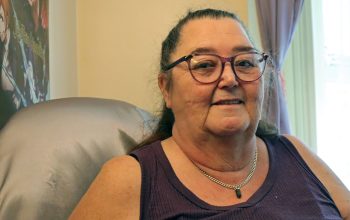
As a child, Sue was often put in the middle between her parents, who had an abusive and abrasive relationship.
“My parents’ marriage was horrible,” said Sue. “My mom would throw things at my father.”
Even after the divorce, her parents would put Sue in the middle of their arguments, and make her feel she had to choose one over the other.
“It led to a lot of anger for me,” said Sue. “I was always angry at everyone and everything.” Sue drank a lot in high school and would skip more classes than she attended. Her father was strict, so Sue chose to stay with her mother, who was a lot more permissive.
“My mom gave me no rules,” said Sue. “I lost my mind a bit, and I lost my way. A lot.”
Unfortunately, Sue didn’t get along with her mom, getting kicked out of her home when she was only 17 years old.
During her teen years, Sue struggled with depression, trying to kill herself several times. It was after she survived her third attempt that she finally decided to get help.
“My psychiatrist told me I had this wall that I put up, not letting anyone in. To this day, I still have a hard time trusting people.”
While still in her teens and homeless, Sue met her husband. They dated for a short time before moving in together, and eventually got married.
“It wasn’t a good marriage,” said Sue. “But after a few years, I got pregnant with my daughter, Sharon. She changed things for me. I had this tiny little person who depended on me.”
Sue continued to work on her marriage, trying to keep things together. But after she suffered a miscarriage, a fight with her husband turned physical. That’s when she decided she would be better off on her own.
As a single mother, Sue wasn’t always able to find work, but tried her best to provide. She worked at Subway until she was diagnosed with degenerative disc disease.
Even that didn’t slow her down much until she was also diagnosed with emphysema, making her unable to work. This meant that her only income came from her monthly disability payments.
Sue was getting by while living in subsidized housing, but it wasn’t until she found out about supportive housing – deeply affordable housing that comes with tailored, one-on-one support – that she was able to move beyond mere survival.
Today, Sue has found a community of her own at Eby Village, House of Friendship’s Supportive Housing community.
“It’s just knowing that I have that person, that I can go to when I’m just ready to pull my hair out. I can go and say, ‘I need something,’ and hear my support worker say, ‘Here’s what we can do.’
“It’s really improved my life,” said Sue. “I didn’t have anything like that before. I didn’t have the tools that would make me happier and healthier.”
Sue has become very involved in the community at Eby Village, having served for 14 years on the tenant council, helping organize events for other tenants.
She’s also become a support for others living in Eby Village, a person they turn to when they need advice. In her spare time, Sue enjoys writing, something that helps her express her creativity.
Sue regularly visits the onsite counsellor as she continues to work through the trauma of her childhood, feeling the strength that comes from having someone to talk to.
“It’s truly amazing. I feel like I finally have a place where I belong, where I can contribute something; where I am accepted for who I am.
“I’m safe. For the first time in my life, I have what feels like a safe, stable home.”
Thank you for your care and compassion, and commitment to helping people like Sue get the support they need to build a strong, healthy life for themselves. Your support makes a lasting difference for people in our community who are struggling with addiction, homelessness and mental health challenges.